
Closed-cell structure
A fine-cell material format suited to clean, shaped protective-packaging components.
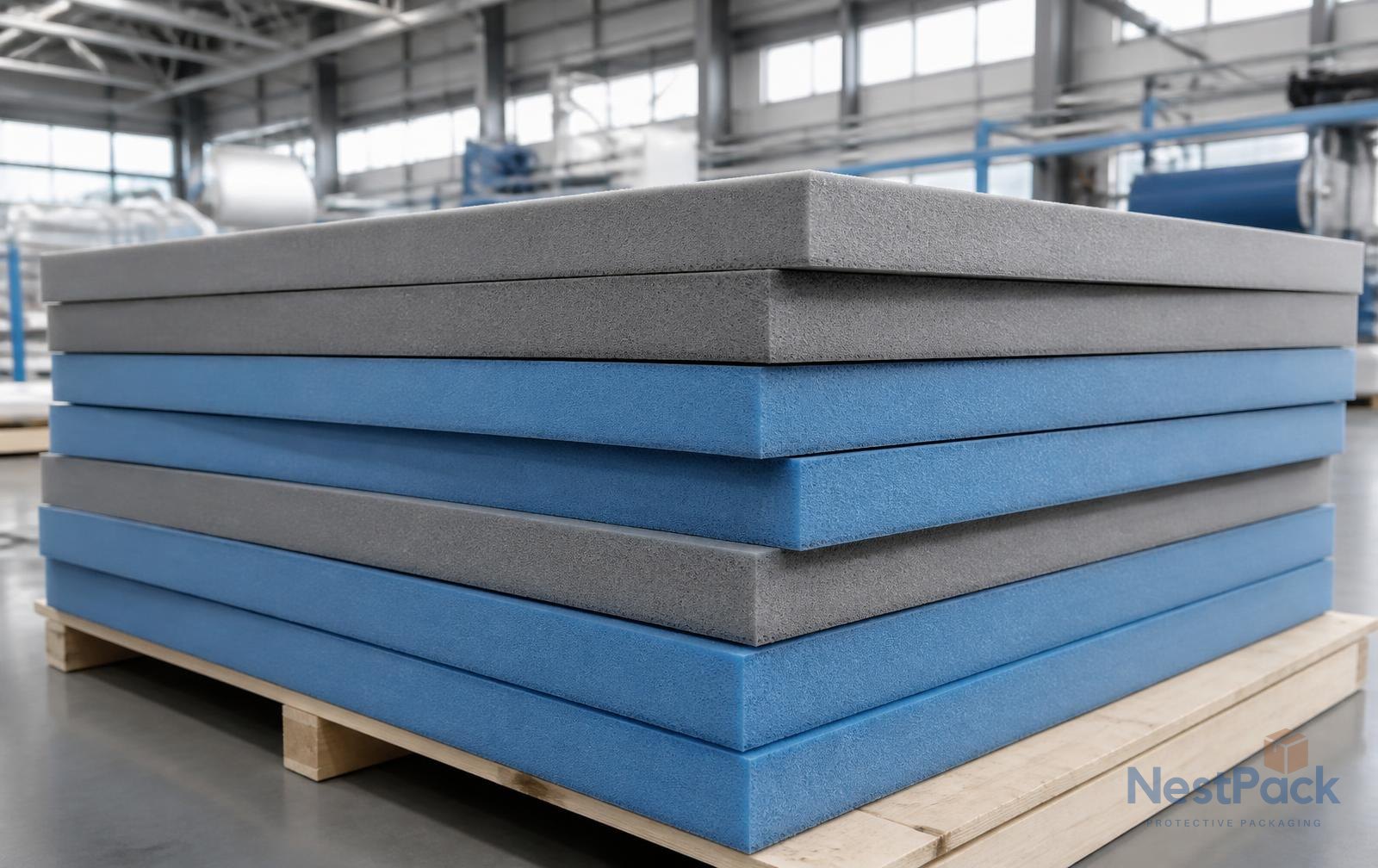
XLPE foam sheet manufacturer India
High-performance XLPE foam sheets and custom foam packaging solutions for industrial, electronic, automotive, medical, aerospace and export applications.
Available as foam sheets, pads, blocks and custom-cut packaging components.
Get pricing based on size, thickness, density, quantity and application.
Supply & conversion
Material overview
XLPE (Cross Linked Polyethylene) foam is a closed-cell foam material used for protective packaging, cushioning, insulation-related applications and custom foam components. NestPack supplies XLPE foam in sheet form and converts it into application-specific packaging based on customer requirements.
Procurement and packaging teams can source sheets, pads and blocks or request custom XLPE foam inserts, fitments, CNC-cut components, die-cut components and complete protective packaging from one Bengaluru-based supplier.
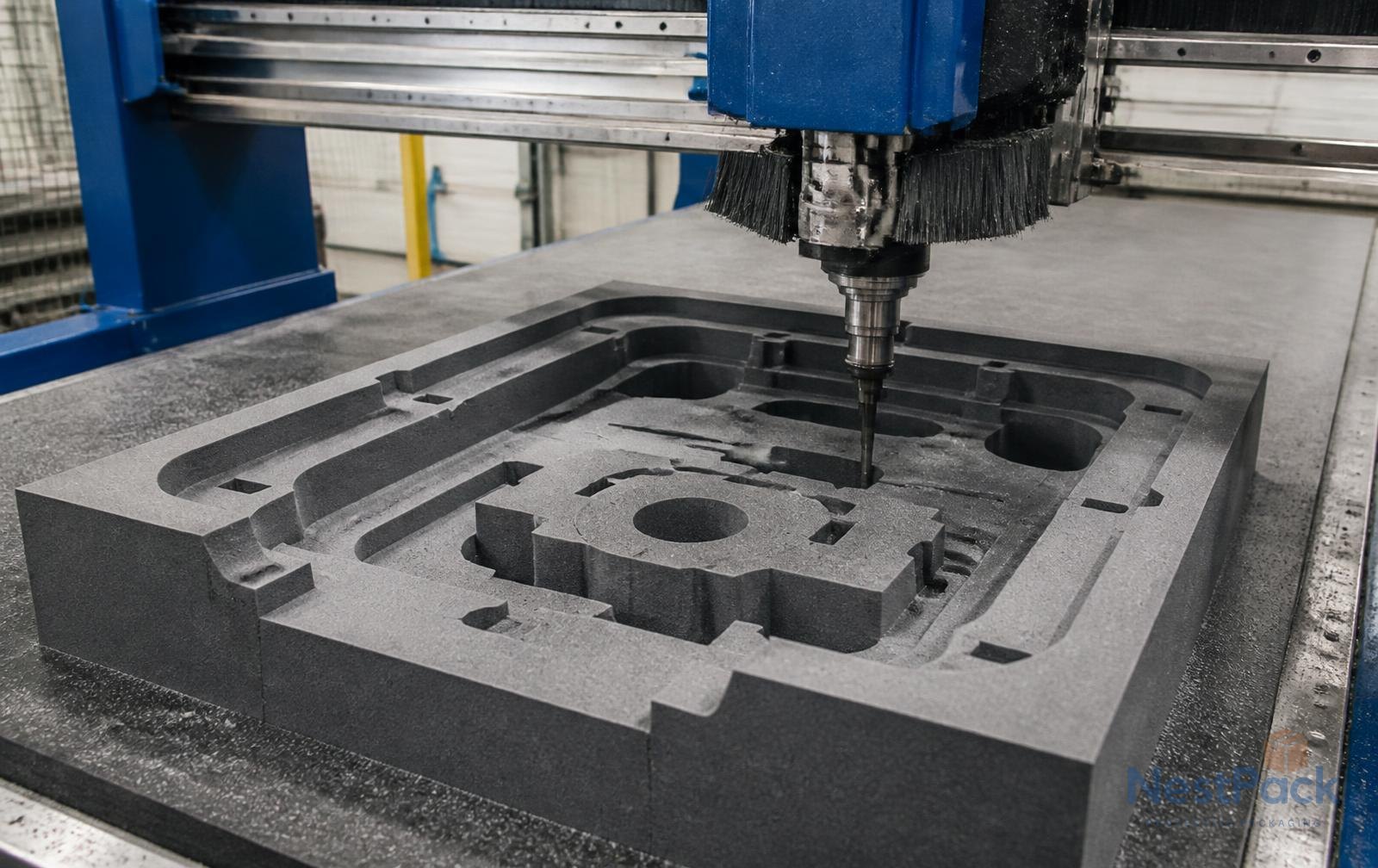
A fine-cell material format suited to clean, shaped protective-packaging components.
Adds cushioning and separation without making industrial packs unnecessarily heavy.
Can be selected and configured around component weight, geometry and handling conditions.
A clean cut face supports presentation-sensitive OEM and equipment packaging.
Suitable for CNC cutting, die cutting, lamination, pads, blocks and shaped components.
Used in reusable, line-side, storage, transit and export-packaging configurations.
Cavities and support points can be developed from drawings, dimensions or samples.
Can be combined with corrugated boxes, plywood boxes and protective hard cases.
Enquiry checklist
Availability varies by material grade and order requirement. Send the selection details below for a current quotation rather than relying on a generic stock list.
Thickness
Ask for available thickness
Density
Share component weight and application
Sheet size
Ask for available sizes
Colour
Confirm required colour
Grade
General XLPE or specific functional grade
Quantity
Ask for bulk pricing
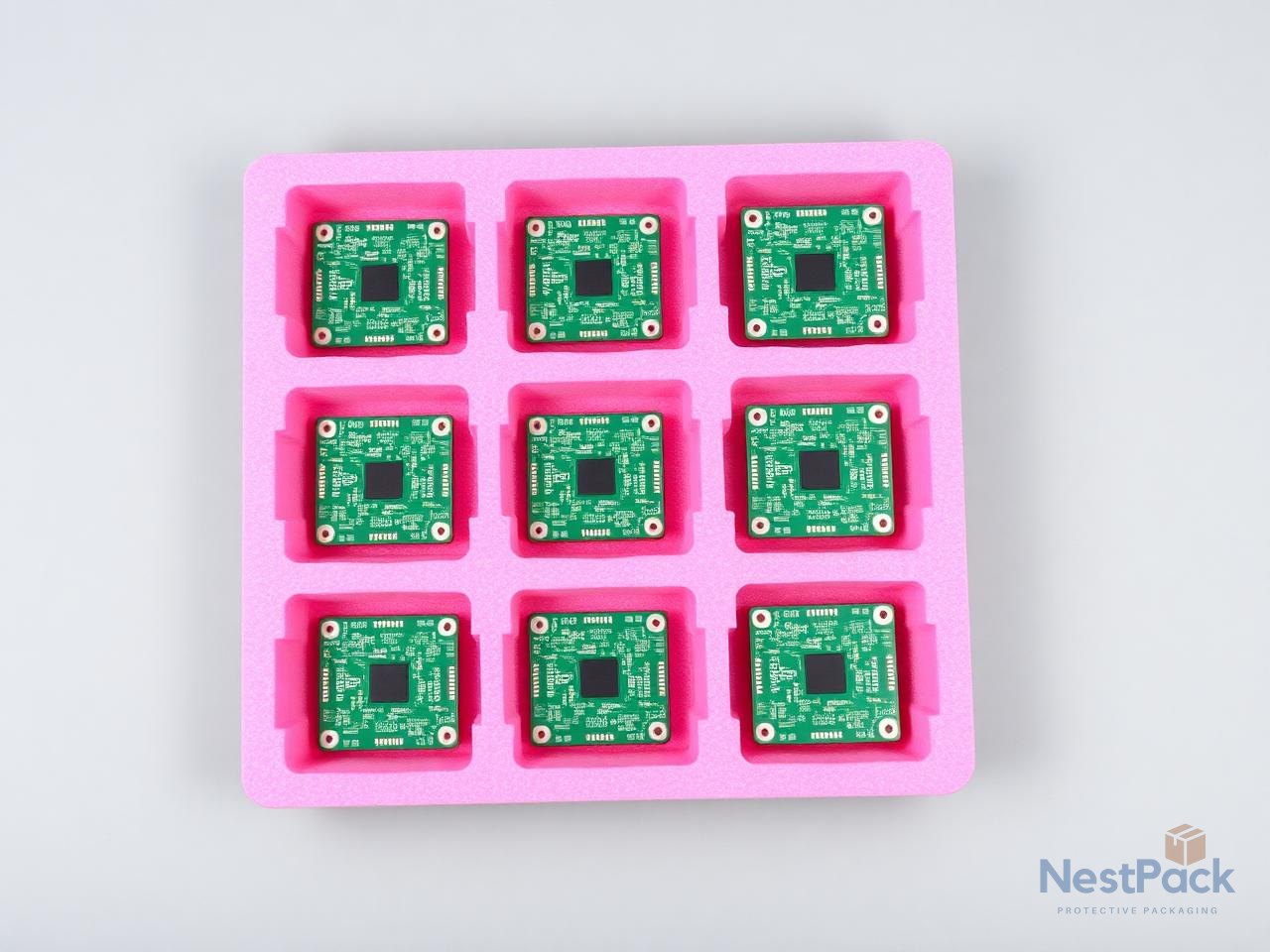
Specific functional grades for electronics packaging; not all XLPE foam has ESD properties.
Specific material grades
NestPack also supplies specific ESD / static-dissipative and conductive foam material for electronic items packaging. These are distinct options and should not be confused with general XLPE foam.
The values below relate specifically to the supplied Capcell MSDS and should not be read as specifications for every XLPE product supplied by NestPack.
| Material | Cross Linked Polyethylene Foam – Capcell | Supplier MSDS |
|---|---|---|
| Composition description | Crosslinked Polyethylene involving Ethylene Homopolymer / Ethyl Vinyl Acetate Copolymer | Supplier MSDS |
| Density at 23°C | 60–100 ±8% kg/m³ | ASTM D3575 |
| Melting range | 105–110°C | Supplier MSDS |
| Flash point | 420–450°C | Supplier MSDS |
| Ignition temperature | 430–450°C | Supplier MSDS |
Material suitability and application performance should be validated for the intended packaging configuration.
Custom conversion
NestPack converts XLPE foam sheets into custom protective packaging based on customer drawings, samples and component dimensions. The conversion method is selected around geometry, order volume and the complete pack.
Have a drawing? Send it to our packaging team.
Separates electronic assemblies, control modules and accessories during handling and transit.
Custom trays, layer pads and fitments for production parts and engineering samples.
Drawing-based cradles for precision components and service equipment.
Protective case interiors and component separators for field and depot movement.
Organised fitments for diagnostic devices, instruments and accessories.
Cushioned supports for gauges, motors, tooling and machine components.
Layer pads and custom cavities for switches, connectors and control equipment.
Purpose-built inserts for meters, probes, optics and calibration kits.
Foam components integrated into corrugated, plywood or hard-case transit packs.
Protective pads and separators for machined, painted and finished parts.
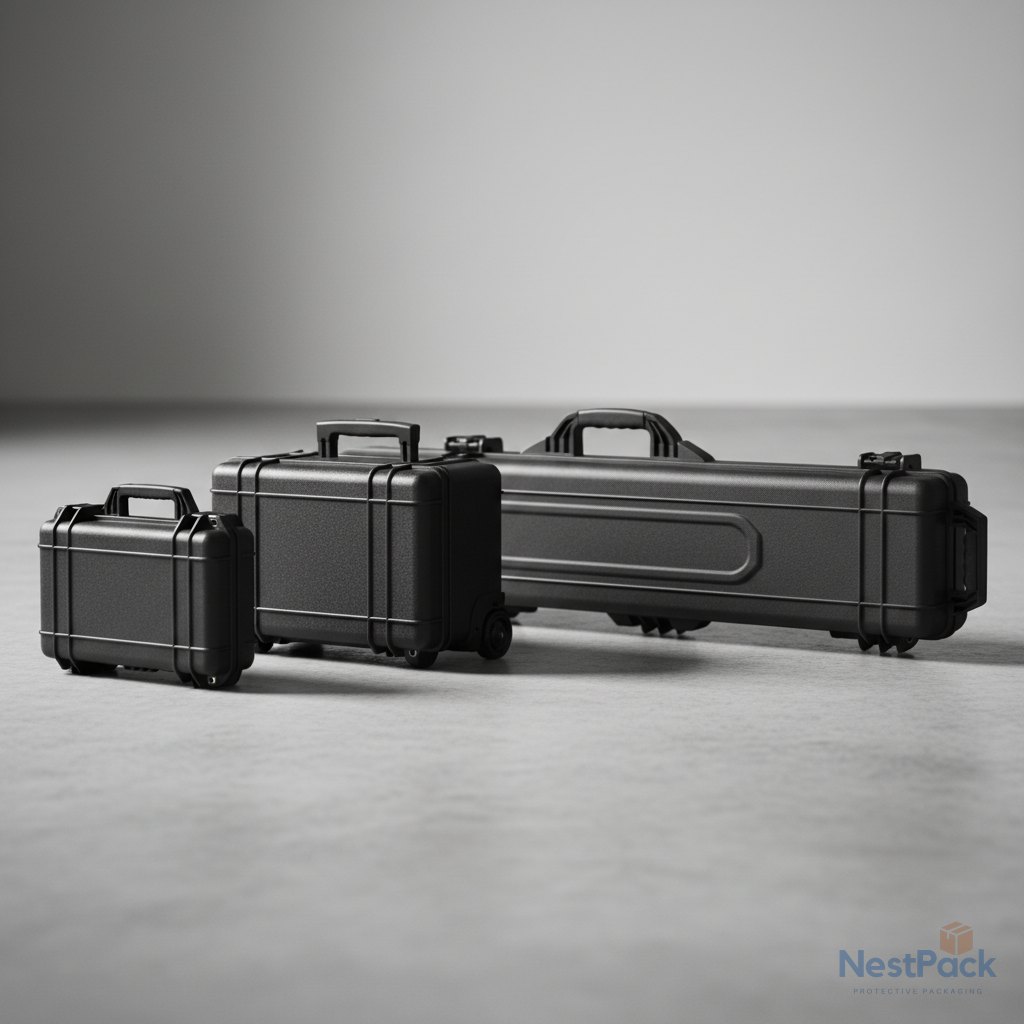
NestPack can provide foam conversion together with the outer industrial pack, reducing coordination between separate sheet, converter and box or case suppliers.
NestPack Private Limited supports procurement teams, OEM manufacturers and packaging engineers with material supply, foam conversion and complete transit-pack development.
NestPack supplies XLPE foam sheets and custom foam components for industrial and OEM packaging requirements. Send the required thickness, sheet size, density, quantity, application, drawing or sample photograph.
Tracked B2B enquiry
Share enough information for pricing and material review. Your enquiry and optional drawing are stored privately for the NestPack sales team and appear in Admin Enquiries.
XLPE is cross-linked polyethylene foam with a closed-cell structure. It is supplied as sheets and converted into protective pads, inserts, fitments and other packaging components.
It is polyethylene foam whose polymer structure has been cross-linked to create a fine, stable closed-cell material suitable for industrial conversion.
Common uses include industrial protective packaging, equipment inserts, component trays, separators, cushioning pads and custom fitments for boxes or cases.
NestPack supplies XLPE foam sheets and converted packaging components from Whitefield, Bengaluru to B2B customers across India.
Yes. Ask for current sheet sizes, thicknesses, grades, colours and bulk availability for your application.
Yes. NestPack converts XLPE from drawings, dimensions or samples using the process suited to the geometry and order volume.
Yes. Inserts can include component cavities, accessory spaces, pads, separators and layered constructions.
Yes. CNC cutting is available for shaped cavities and custom fitments. Share your CAD file, drawing or component details for review.
General XLPE can provide cushioning and separation for electronics packaging. Static-sensitive components may require a specific ESD or conductive grade and a validated complete-pack design.
NestPack supplies specific ESD / static-dissipative and conductive material options. These grades are distinct from general XLPE foam.
XLPE describes a foam material family. ESD or conductive grades are specific electrically functional materials with documented surface-resistivity ranges; general XLPE should not be assumed to have those properties.
Yes. Send the required thickness, sheet size, density or grade, quantity and application for current availability and bulk pricing.
Yes. The packaging team accepts drawings, CAD files, component dimensions, photographs and physical samples for development.
Yes. NestPack can integrate custom XLPE pads or fitments with corrugated packaging for a complete pack.
Yes. XLPE fitments can be supplied with plywood packaging or protective hard cases after reviewing the equipment and transit requirement.
Ready to specify your pack?
Talk to a packaging engineer about sheet supply, custom conversion or a complete protective pack.