
Aerospace

Aerospace Foam Packaging Design & Manufacturing in India

Mission-critical foam fitments engineered in Bengaluru 560066 for avionics LRUs, turbine sensors, UAV payloads and MRO cases. AS9100-aligned processes, ATA 300 / MIL-STD-810 cushioning references, and CAD-driven CNC machining — trusted by aerospace OEMs and Tier-1/Tier-2 suppliers across the Bengaluru, Hyderabad and Chennai corridor.

+91 96863 88696
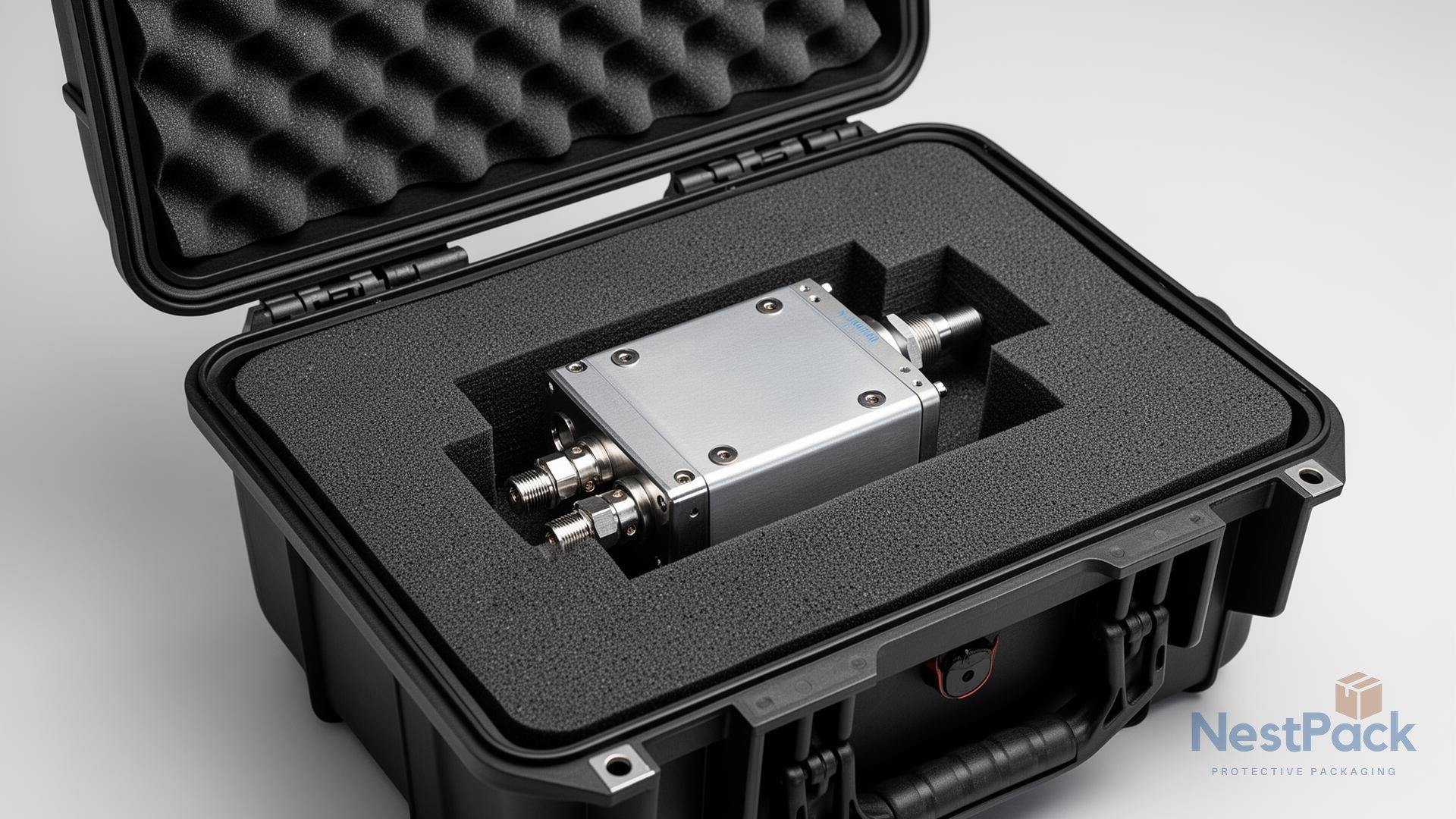
Aerospace foam fitment engineered for avionics LRU at NestPack Bengaluru 560066
Design Philosophy

Engineering Foam Fitments for Aerospace

Aerospace cargo sees more environmental punishment than almost any other shipment — multi-modal handling, pressure swings at altitude, sub-zero hold temperatures, monsoon humidity on Indian highways, and salt-fog on coastal MRO returns. A foam cradle that looks fine in a workshop can shed fibre into a connector, take a permanent compression set, or simply stop fitting after three trips.

We design every aerospace fitment around six engineering pillars — calculated against the fragility curve of the protected component, not against generic "soft foam" rules of thumb.

Shock & vibration

Cushion thickness sized to drop-height and component fragility (G-level) curves.

Thermal & altitude cycling

Closed-cell XLPE retains structure across –40 °C to +70 °C and pressure swings.

FOD prevention

Skin-finished, non-shedding foams keep loose fibre out of LRU connectors and bays.

Humidity & salt-fog

Hydrophobic cells survive monsoon transit and coastal storage without degradation.

ESD for avionics

Pink anti-static EPE and conductive PU options for sensitive electronic LRUs.

Reusable for MRO

Tool-controlled cavities so MRO returns ship back in the same protective cradle.

Design Process

From Drawing to MRO-Ready Cradle

  1. 01
    Requirements capture

    Drop height, G-levels, transit mode, MIL-STD-810H and ATA 300 Cat I/II references.

  2. 02
    CAD intake

    STEP / IGES / DXF / DWG under NDA — or 3D-scan from a physical sample.

  3. 03
    Material selection

    XLPE density, EVA, PU ester or anti-static EPE chosen against the fragility curve.

  4. 04
    Prototype & drop-test

    CNC-machined sample, fit-check on the LRU, in-house drop and compression validation.

  5. 05
    Validation

    Customer FAI sign-off, density and dimensional report, optional third-party test.

  6. 06
    Production & serialisation

    Batch CNC, labelling pockets, serialised cradles for traceability and MRO returns.

Material Selection Matrix

The Right Foam for the Right Aerospace Job

Material & densityCompression setTypical aerospace use
XLPE 30 kg/m³Low (~5%)Light avionics LRUs, instrument panels
XLPE 60–90 kg/m³Low–Medium (~8%)Standard avionics & sensor cradles
XLPE 200 kg/m³Very low (~3%)Turbine blades, heavy probe cases
EVA (medium density)Low (~10%)Tool control, calibration kit inserts
PU ester (open cell)Recovers fullyOptical & EO/IR payload cradles
Anti-static pink PELow (~12%)ESD-sensitive avionics PCBs & LRUs

Compression set values are indicative for the densities we typically supply; final values depend on test method (e.g. ASTM D3575) and customer-specified conditioning.

Standards & Test References

We Build To These References

NestPack designs and tests aerospace foam fitments aligned to the references below. We do not claim independent certification — final certification is the responsibility of the container OEM or the customer's quality system.

ATA Spec 300 Cat I / II / III

Reusable shipping container categories — drives cradle reuse cycles.

MIL-STD-810H

Shock, vibration, drop, humidity & temperature test references.

MIL-STD-2073

DoD packaging preservation methods — barrier and cushioning levels.

RTCA DO-160

Environmental conditions for avionics — informs storage cushioning.

IATA DGR

Lithium battery transport cushioning for UAV and avionics shipments.

ISPM-15

Heat-treated wood crating that pairs with our foam interiors for export.

Case Studies

Aerospace Fitments in the Field

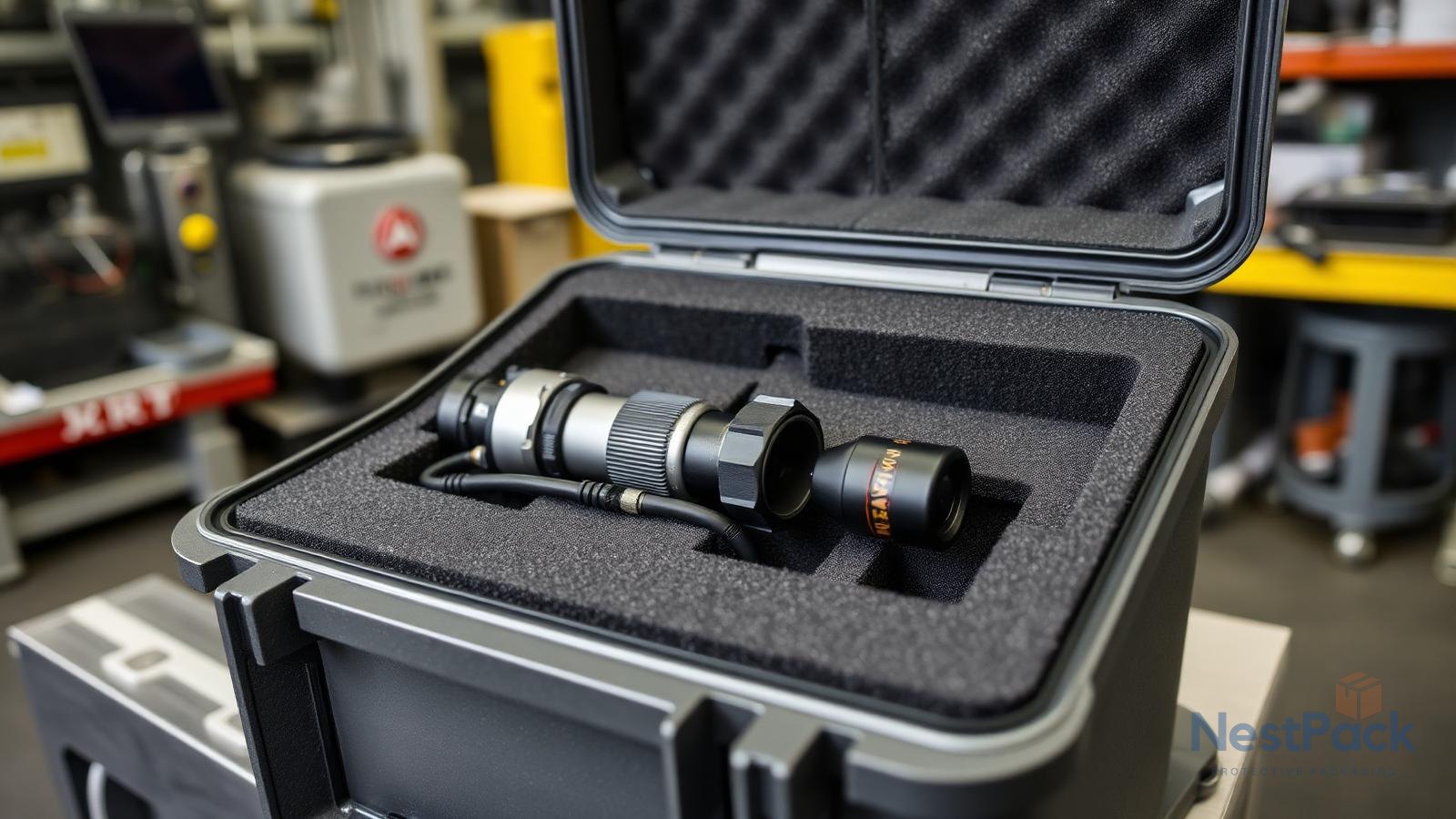
Avionics LRU shipping cradle

Problem

Tier-1 supplier reported in-transit rework on a navigation LRU after multi-modal shipments.

Solution

Two-piece XLPE 60 kg/m³ cradle with tool-controlled cavity, lift cut-outs and ESD-foam contact face inside a Pelican-style hard case.

Outcome

Reported 40% reduction in transit rework and reuse across 12+ MRO cycles.
Turbine blade shipping cradle

Problem

Heavy single-blade returns were arriving with edge-contact damage in returnable wooden crates.

Solution

CNC-machined XLPE 200 kg/m³ cradle conforming to the blade aerofoil, paired with an ISPM-15 export crate.

Outcome

Zero edge-damage reports across the first production batch of 50 units.

Flight-line tool control foam

Problem

MRO bay needed FOD-proof tool layout for a portable flight-line kit.

Solution

Two-colour shadow board in EVA — black base, hi-vis orange contrast layer — with serialised pockets for each tool.

Outcome

Tool accountability checked in under 30 seconds per shift change.

Applications

Where Our Aerospace Foam Ships

  • Avionics LRU shipping cases
  • Ground support equipment crates
  • Turbine blades & sensor probe cradles
  • Calibration & test standard cases
  • EO/IR payload cradles
  • UAV / drone payload foam fitments
  • Satellite sub-assembly handling
  • MRO return-to-base reusable cases
Gallery

Aerospace Foam — In Production

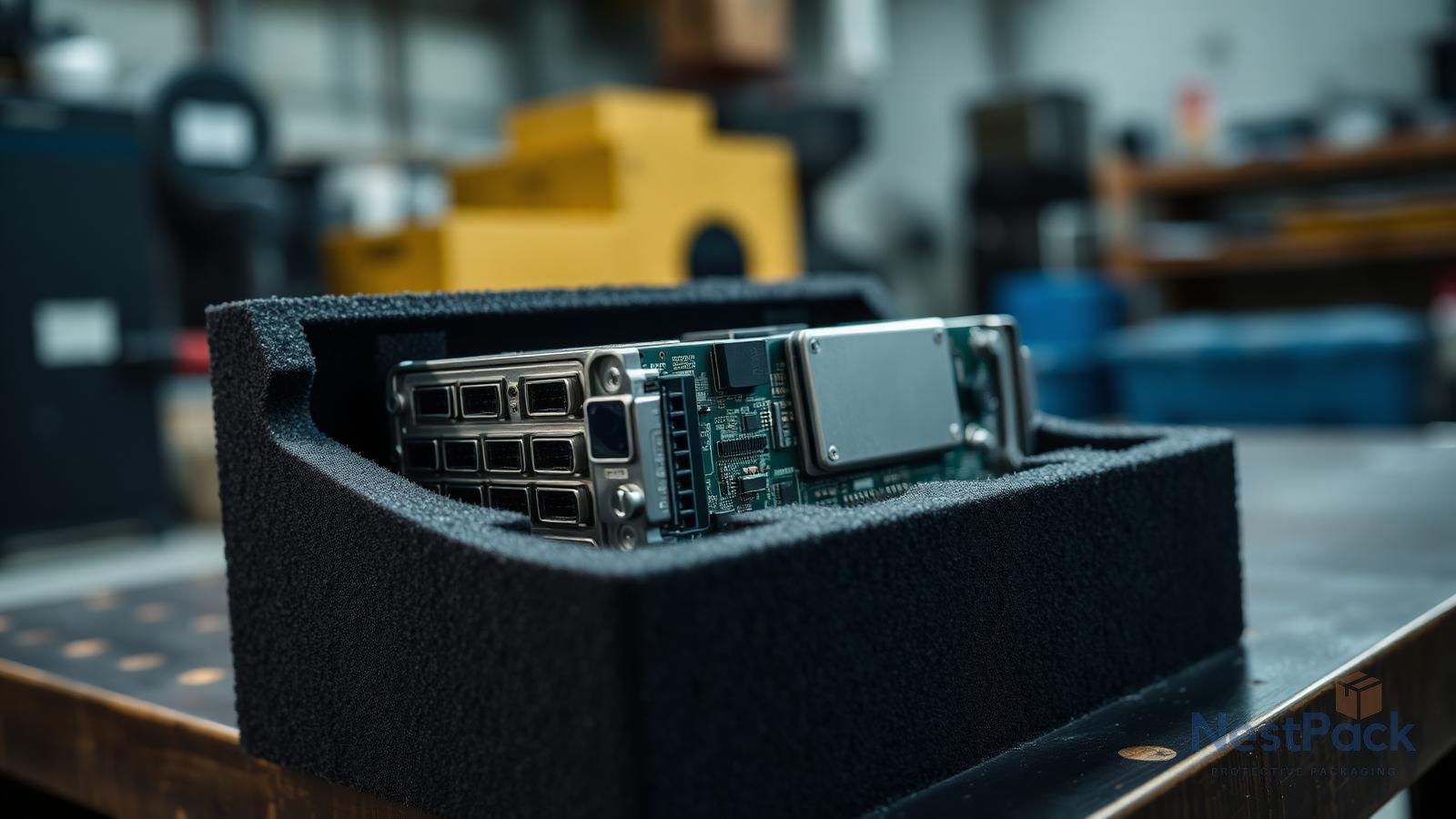
NestPack aerospace foam fitment manufactured in Bengaluru — view 1
NestPack aerospace foam fitment manufactured in Bengaluru — view 2
NestPack aerospace foam fitment manufactured in Bengaluru — view 3
FAQ

Aerospace Packaging — Common Questions

Do you build foam fitments to ATA Spec 300?

Yes. We design and manufacture foam cradles intended for use inside ATA 300 Cat I, II and III shipping containers. We align our cushioning calculations to the drop-height and reuse cycles defined in the spec, but ATA 300 certification of the finished container is performed by the container OEM.

What is the typical lead time for a custom aerospace foam cradle?

Prototype samples ship in 5–8 working days from our Bengaluru 560066 facility once CAD or a physical sample is approved. Production batches typically run in 2–4 weeks depending on density, finish and quantity.

Can you CAD-design directly to our LRU drawings?

Yes. We accept STEP, IGES, DXF, DWG and PDF drawings under NDA. Our design team converts the part envelope into a tool-controlled cavity with capture features, lift cut-outs and labelling pockets before CNC machining the foam.

Do you support export crating with foam inserts for aerospace shipments?

Yes. We supply foam inserts that pair with ISPM-15 compliant wooden crates and aluminium hard cases. We can deliver the complete kit — outer crate, foam interior and desiccant — palletised and ready for international freight from Bengaluru.

Are your foam materials low-outgassing and safe near sensitive avionics?

Our default XLPE and EVA grades are chemically stable, low-residue and suitable for avionics handling. For optical, satellite or cleanroom assemblies we offer specially selected low-outgassing and anti-static grades on request.

Need an aerospace fitment designed?

Send your LRU drawings, CAD or a sample — we'll engineer the foam cradle from our Bengaluru 560066 facility.

Email SalesContact Form