
Plywood & Corrugated Boxes for Industrial Packaging
A complete guide to plywood boxes, wooden packaging and 3-ply, 5-ply and 7-ply corrugated boxes — construction, strength, ECT, foam integration and export packaging for Indian OEMs.
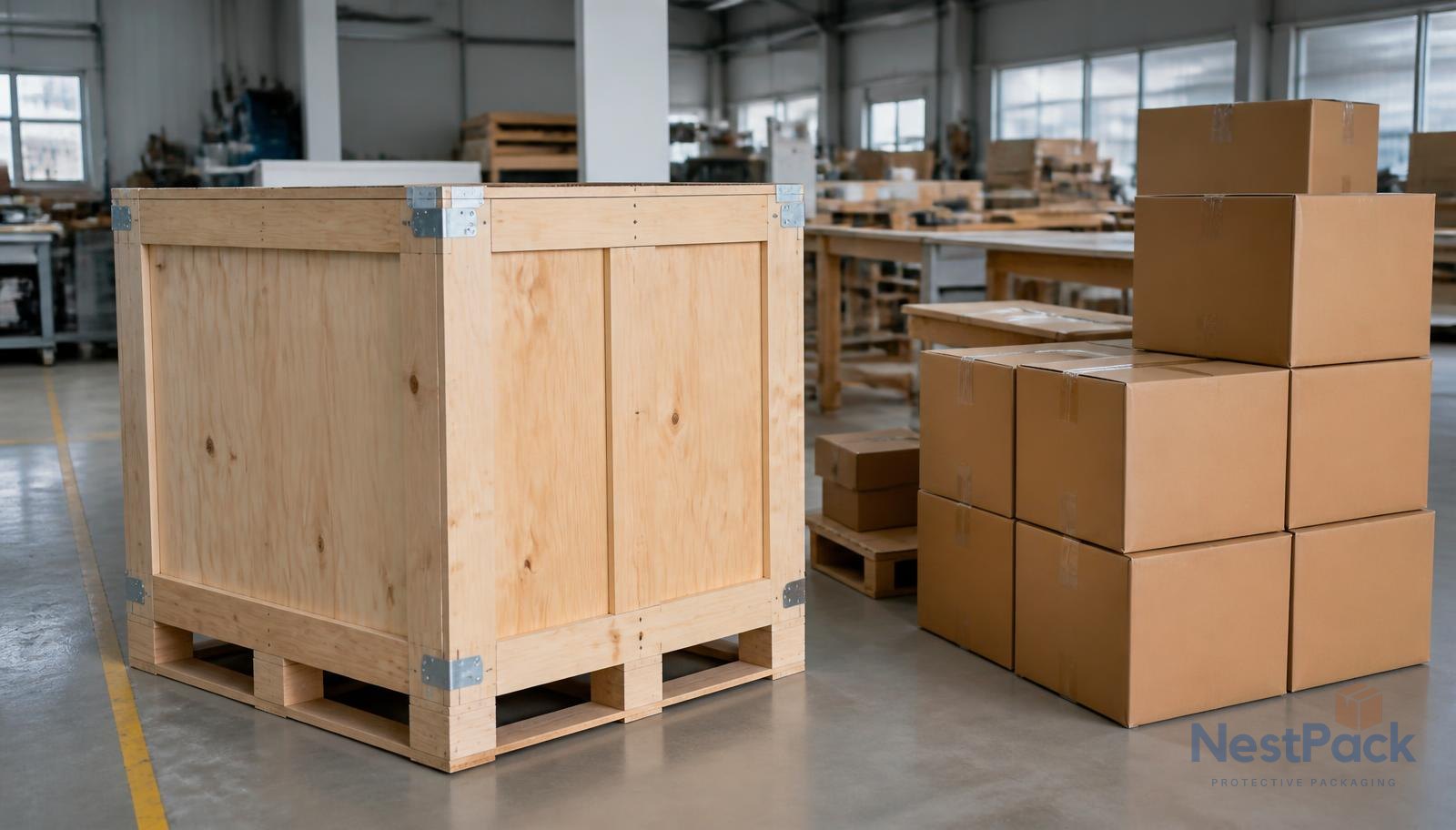
NestPack manufactures custom industrial packaging in Bengaluru — plywood boxes and wooden packaging for heavy equipment, and 3-ply, 5-ply and 7-ply corrugated boxes for domestic and export shipments. Both can be combined with custom foam inserts so the product is held securely instead of moving inside the pack.
This guide explains how each construction is built, where it is used, what ECT means, and how purchase and packaging managers can select the right packaging for their product, transport mode and stacking requirement.
Plywood Boxes for Industrial Packaging
A plywood box is a rigid wooden packaging case built from plywood panels on a battened or skid frame. Because the walls do not deflect under load, plywood packaging boxes are used where the product is heavy, bulky, expensive or exposed to rough handling during multi-leg transportation.
Typical applications
- Industrial machinery
- Engineering components
- Electrical equipment
- Control panels
- Motors and pumps
- Automotive components
- Aerospace components
- Defence equipment
- Medical equipment
- Export shipments
Why engineering companies choose plywood
- Rigid protection against impact and crush loads
- Structural strength for heavy and off-balance products
- Custom dimensions built around the product
- Suitable for forklift and crane handling
- Can be lined with foam for sensitive equipment
- Holds shape through long-distance and export movement
Corrugated Boxes for Industrial Packaging
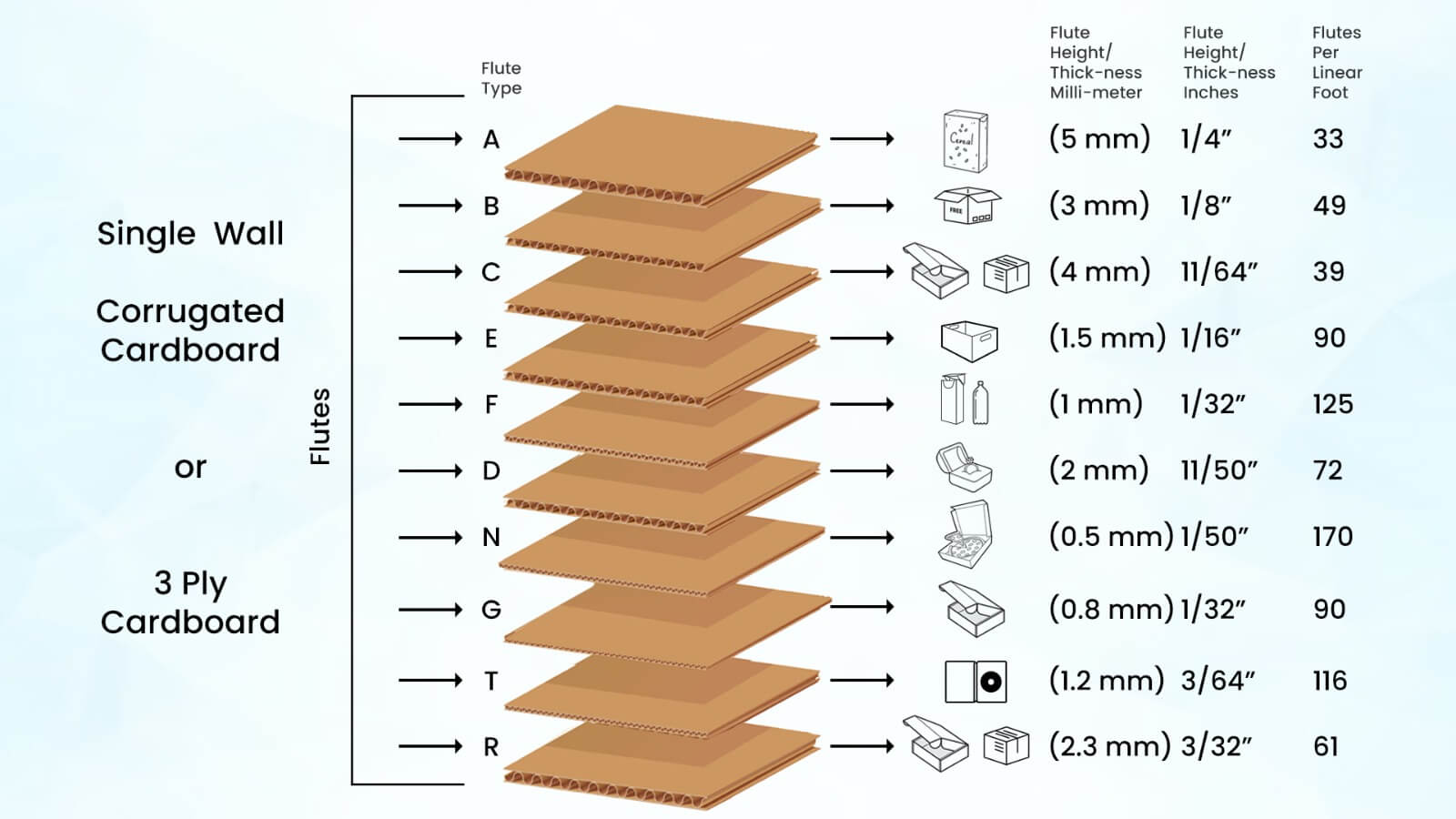
Corrugated board is made of flat kraft liners bonded to a fluted (wavy) medium. The flutes act like a series of arches: they absorb shock, resist crushing and add stiffness while keeping the board light. Adding more liner and flute layers gives 3-ply, 5-ply and 7-ply constructions.
- Lightweight construction keeps freight cost down
- Cost efficiency for medium and high volumes
- Easy handling and quick assembly on the line
- Custom sizes to suit any product footprint
- Good stacking performance in warehouses and containers
- Suitable for domestic and export packaging
3-Ply Corrugated Boxes
A 3-ply corrugated box (single wall) is built from two kraft liners with one fluted medium between them. It is the most economical construction and is used where the product is light and the transit route is short or well controlled.
Applications
- Lightweight products
- Electronics and accessories
- Small engineering components
- Spares and consumables
- Secondary packaging inside a larger master carton
5-Ply Corrugated Boxes
A 5-ply corrugated box (double wall) adds a second fluted medium and a third liner. The extra wall raises stacking strength, puncture resistance and cushioning, which is why 5-ply is the most common construction for industrial and export dispatch in India.
Applications
- Industrial components
- Automotive parts
- Electronics assemblies
- Machinery components
- Medium-weight products
- Export packaging
- Long-distance transportation
7-Ply Corrugated Boxes
A 7-ply corrugated box (triple wall) uses three fluted mediums and four liners. It is a heavy duty corrugated box used where the load is high, the box is large, or the shipment will be stacked and handled repeatedly before it reaches the customer.
Applications
- Heavy engineering components
- Machinery parts
- Automotive components
- Industrial equipment
- Heavy electrical products
- Large assemblies
- Export shipments
3-Ply vs 5-Ply vs 7-Ply: Comparison Table
| Feature | 3-Ply | 5-Ply | 7-Ply |
|---|---|---|---|
| Relative strength | Basic | Medium / High | High |
| Weight | Low | Medium | Higher |
| Cost | Lower | Medium | Higher |
| Suitable for | Lightweight products | Industrial products | Heavy-duty products |
| Stacking | Moderate | Better | Higher |
| Export applications | Selected | Common | Heavy-duty |
| Foam integration | Yes | Yes | Yes |
Note: actual performance depends on GSM, flute profile, board construction, box dimensions and the ECT/BCT requirement of your shipment. Ply count alone does not define strength.
What Is ECT in Corrugated Packaging?
ECT stands for Edge Crush Test. A small piece of corrugated board is stood on its edge and pressed until it collapses; the force it withstands is its ECT value. In plain terms, ECT tells you how much vertical load the board can carry before the walls buckle — which is exactly what happens when boxes are stacked on one another.
Why ECT matters
- Heavy products that load the box walls from inside
- Stacking boxes several layers high
- Warehousing over weeks or months
- Palletized shipments and container loading
- Long-distance transportation with repeated handling
- Export packaging exposed to humidity, which reduces board strength
Specifying an ECT requirement — instead of only asking for “5-ply” — lets the board construction be engineered to the real stacking load.
Plywood Box vs Corrugated Box
| Parameter | Plywood Box | Corrugated Box |
|---|---|---|
| Strength | Very high, rigid structure | Good to high depending on ply and GSM |
| Weight | Heavy | Light |
| Cost | Higher | Lower |
| Rigidity | Rigid — walls do not flex | Semi-rigid, absorbs shock by deforming |
| Reusability | Reusable for multiple trips | Typically single or limited trips |
| Heavy products | Preferred | Up to medium/heavy with 7-ply |
| Export applications | Machinery and high-value equipment | Widely used for cartons and assemblies |
| Foam integration | Yes — CNC-cut fitments inside the box | Yes — die-cut or CNC foam inserts |
There is no single correct answer. The right packaging depends on product weight, fragility, value, transport conditions and how many times the pack will be handled before it is opened.
Corrugated Box with Custom Foam Inserts
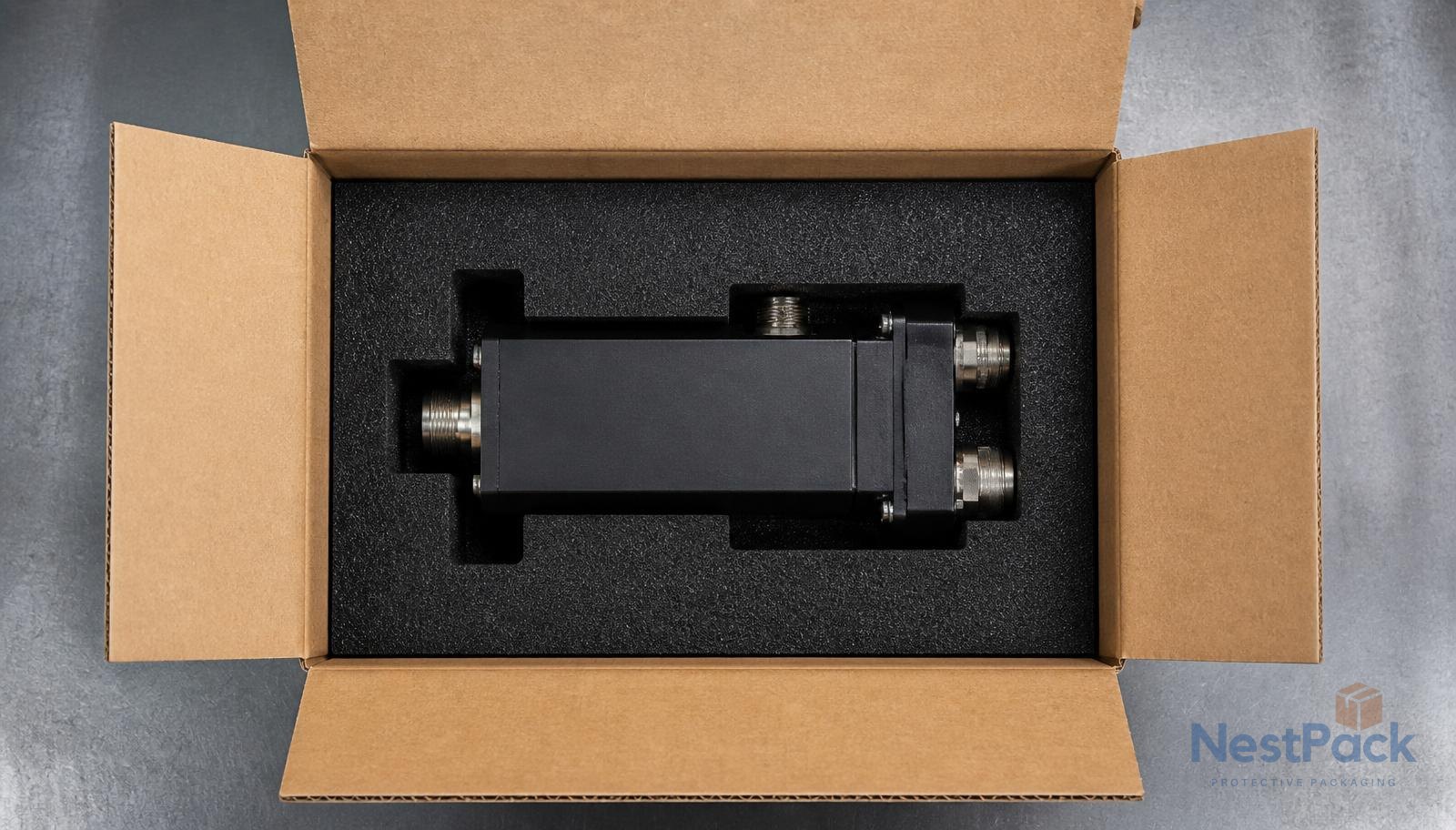
A corrugated box protects against outside impact; the foam fitment inside protects the product from shock, vibration and abrasion. NestPack engineers the cavity so the part is located and cushioned instead of floating loose in void fill.
Foam materials we use
- EPE Foam — light, resilient, general protection
- XLPE Foam — fine cell, premium finish, higher density
- EVA Foam — firm, precise cavities, presentation grade
- PU Foam — soft cushioning and pluck foam
- Anti-static / ESD Foam — electronics and PCBs
- Corrugated + foam packs — box and fitment supplied together
Where box-plus-foam is used
- Electronics and PCBs
- Medical equipment
- Aerospace components
- Defence equipment
- Sensors and metrology items
- Industrial instruments
- Automotive components
- Precision engineering products
Plywood Box with Foam Protection
For sensitive and high-value equipment, the plywood box provides the rigid outer shell and a CNC-cut foam fitment inside carries the product. The foam absorbs shock and vibration during road and sea movement while the plywood resists crush and impact loads.
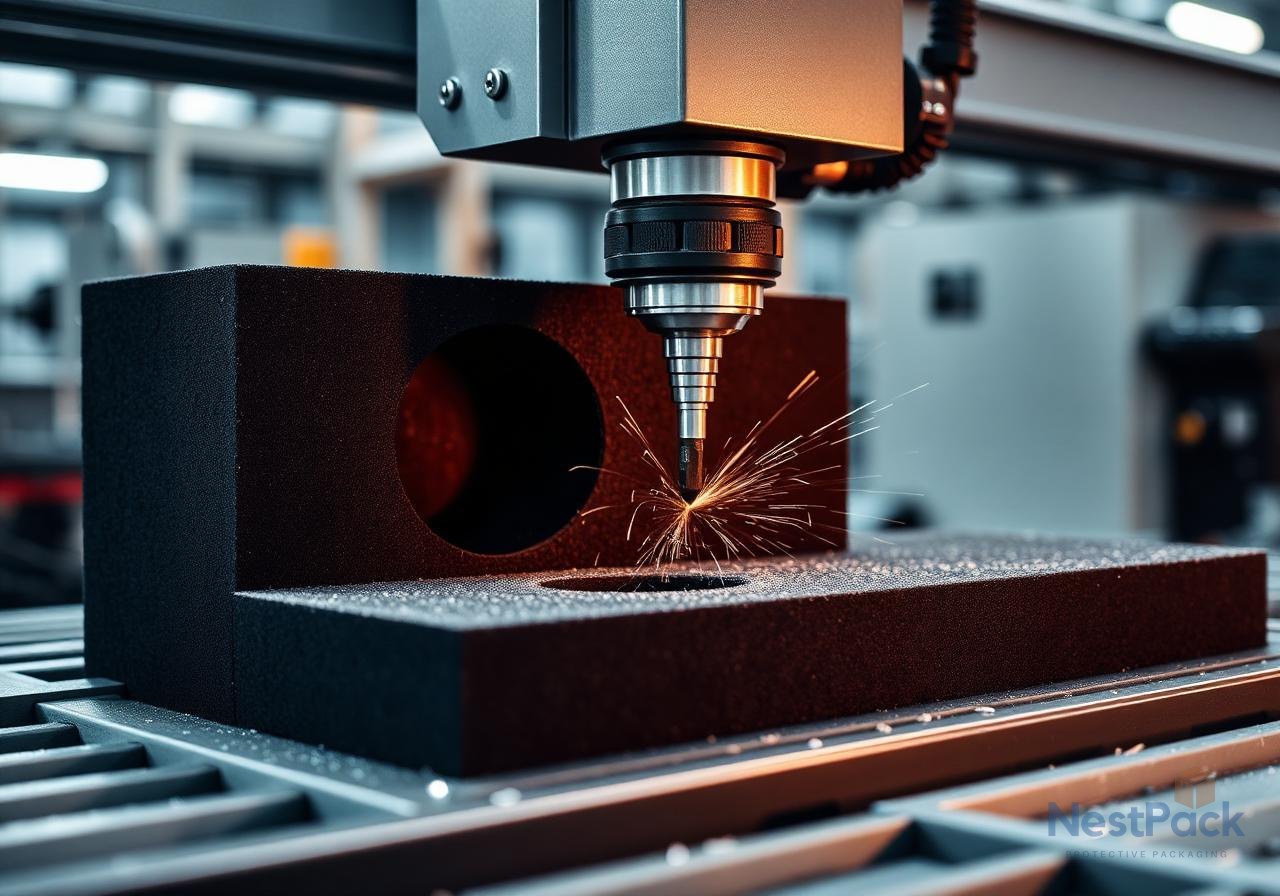
Typical builds combine a plywood case with layered EPE or XLPE cavities, ESD foam for electronics, and separate compartments for cables and accessories. See CNC foam cutting and custom foam inserts for the fitment side, or hard cases when a reusable carry case is a better fit than a wooden box.
Export Packaging
Export shipments face far more stress than a local delivery. Packaging has to survive every leg of the journey, not just the first one.
- Road transportation and repeated loading
- Air freight with rapid handling cycles
- Sea freight over long durations
- Container transportation and tight stacking
- Long-distance shipments with multiple transfers
- Humidity exposure that softens corrugated board
- Shock and vibration during transit
- Stacking and manual handling at each hub
Where a customer or destination country requires ISPM-15 treated wood for solid wood packaging, that requirement should be specified at enquiry stage so the correct material is planned. Related reading: export packaging solutions.
How to Select the Right Packaging
- 1Product dimensionsLength, width and height including any protrusions.
- 2Product weightDrives ply selection, board GSM or plywood thickness.
- 3Product fragilityDecides whether a foam fitment is required and how soft it should be.
- 4Transportation methodRoad, air, sea or container — each loads the pack differently.
- 5Stacking requirementHow many layers high, and for how long in storage.
- 6QuantityPer dispatch and per month, which affects tooling and cost per box.
- 7Export requirementDestination, humidity exposure and any wood treatment requirement.
Share these seven inputs and our team will recommend a plywood or corrugated construction with the right foam fitment. Contact NestPack to start the quotation.
Custom Industrial Packaging Manufacturer in Bengaluru
NestPack is a custom industrial packaging manufacturer based in Whitefield, Bengaluru, supplying OEMs, engineering companies and exporters across India. Packaging is built to the product — not selected from a fixed size chart.
- Plywood boxes and wooden packaging
- 3-ply, 5-ply and 7-ply corrugated boxes
- Heavy duty and custom corrugated boxes
- Export packaging
- Corrugated boxes with foam fitments
- EPE foam packaging
- XLPE foam fitments
- EVA foam inserts
- PU and anti-static / ESD foam
- CNC foam cutting and die cutting
- Industrial protective packaging
Explore custom foams, industrial packaging and our Bengaluru operations.
Frequently Asked Questions
Need Custom Industrial Packaging?
Share your product dimensions, weight, quantity and application with our packaging team.
Email sales@nestpack.in · Phone +91 96863 88696