
XLPE Foam Milling & Die Cut Foam Fitments — Complete Precision Guide
Custom CNC-milled and die-cut XLPE foam fitments engineered in Bengaluru — for electronics, defence, aerospace, medical and industrial OEMs across India.
Introduction
XLPE foam (Cross-Linked Polyethylene) is the industry standard for premium protective packaging in India — used inside Pelican-style hard cases, defence transit kits, medical device trays and aerospace flight-line equipment. Two manufacturing methods bring XLPE from a raw sheet to a finished fitment: CNC foam milling for precision 3D geometry, and die cutting for high-volume flat production.
Ordinary foam packaging — polyethylene wrap, loose fill or hand-cut blocks — cannot deliver the tight tolerances, premium surface and reuse cycles that modern OEMs require. XLPE with CNC milling delivers a cavity fit within ±0.5 mm and a razor-sharp surface finish that survives years of field deployment.
This guide walks through what XLPE foam is, how CNC milling and die cutting differ, the manufacturing process from drawing to dispatch, the industries and applications we serve, and answers to 25 of the most common procurement questions we receive from OEMs across India.
What is XLPE Foam?
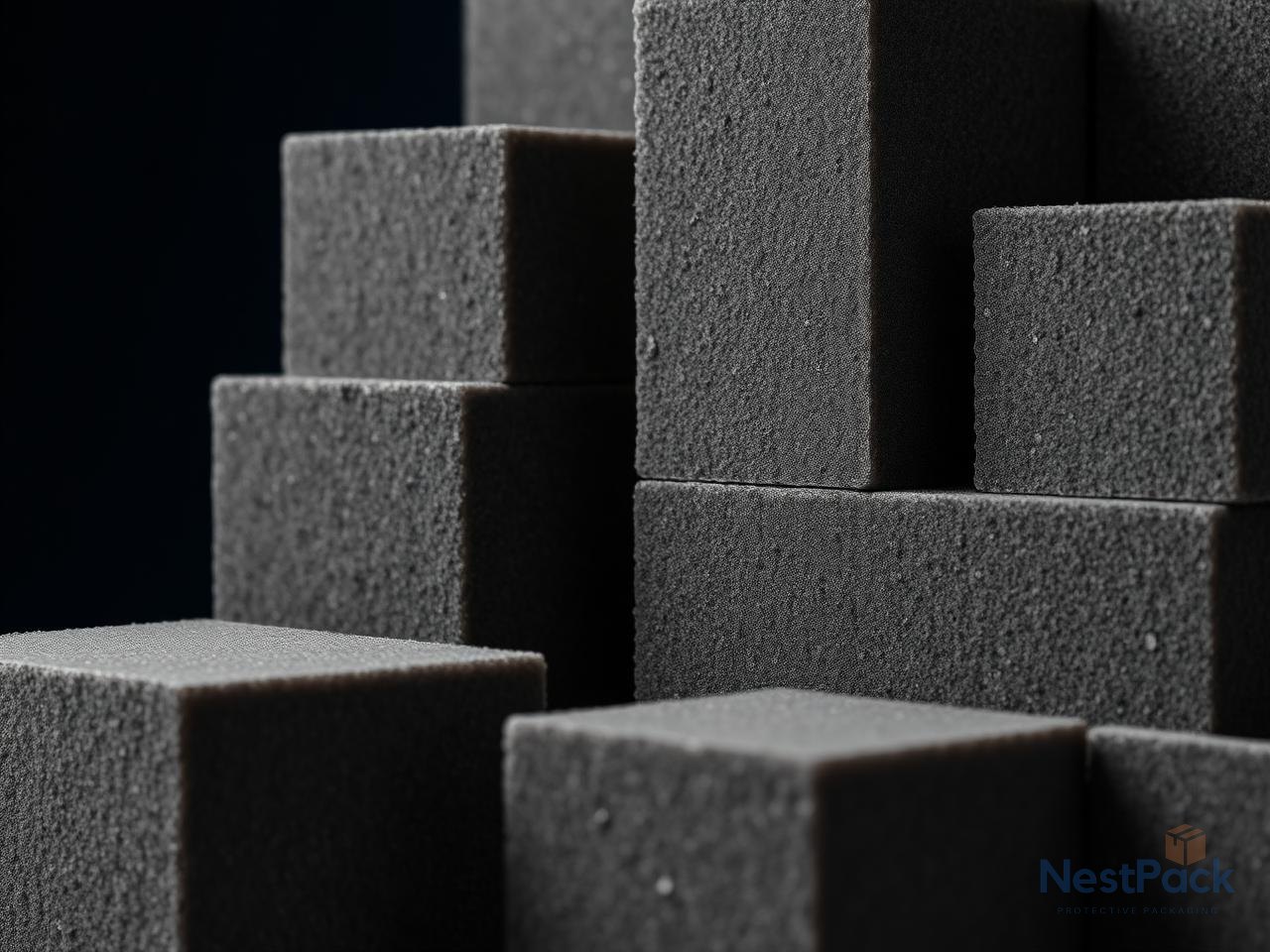
XLPE foam is manufactured by chemically or electron-beam bonding polyethylene chains before expansion. The cross-linked matrix creates a finer, more uniform closed-cell structure than standard PE foam, with dramatically higher density (33 – 200 kg/m³), tensile strength and thermal stability.
The material's fine skin, low water absorption (< 1 %) and excellent chemical resistance make it the default choice inside premium hard cases and export equipment kits. It machines to razor-sharp edges on CNC routers and stamps cleanly on die presses.
Cross-Linked Cell Structure
Chemically bonded polyethylene chains form a fine, uniform closed-cell matrix.
Smooth Premium Surface
Fine skin with razor-sharp CNC edges — ideal for high-value equipment cases.
Excellent Recovery
Retains geometry after thousands of compression cycles inside reusable cases.
Chemical Resistance
Withstands oils, fuels, solvents and cleaning agents without degradation.
Water Resistance
< 1% water absorption — safe for marine, defence and outdoor kits.
High Durability
50+ reuse cycles as a hard-case liner in field-deployed equipment.
Reusable & Long Life
Service life measured in years, not months — a lower total cost of packaging.
−60 °C to +90 °C
Thermally stable for aerospace, defence and cold-chain deployment.
What is Foam Milling?
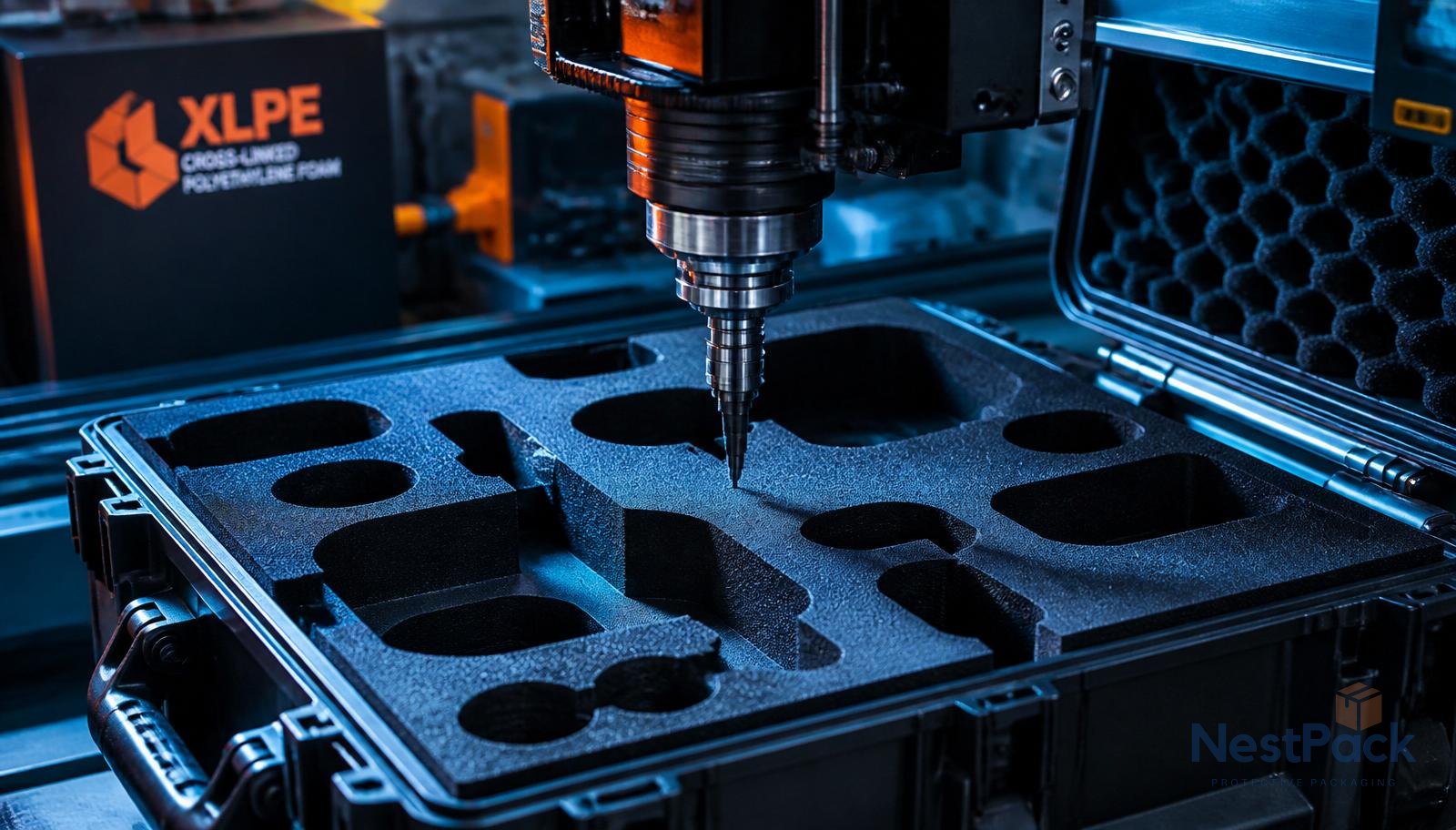
CNC foam milling is the process of machining a foam sheet into a precise 3D geometry using a computer-controlled router. A CAD file drives the toolpath — pockets, contours, cavities and channels — with ±0.5 mm repeatable accuracy.
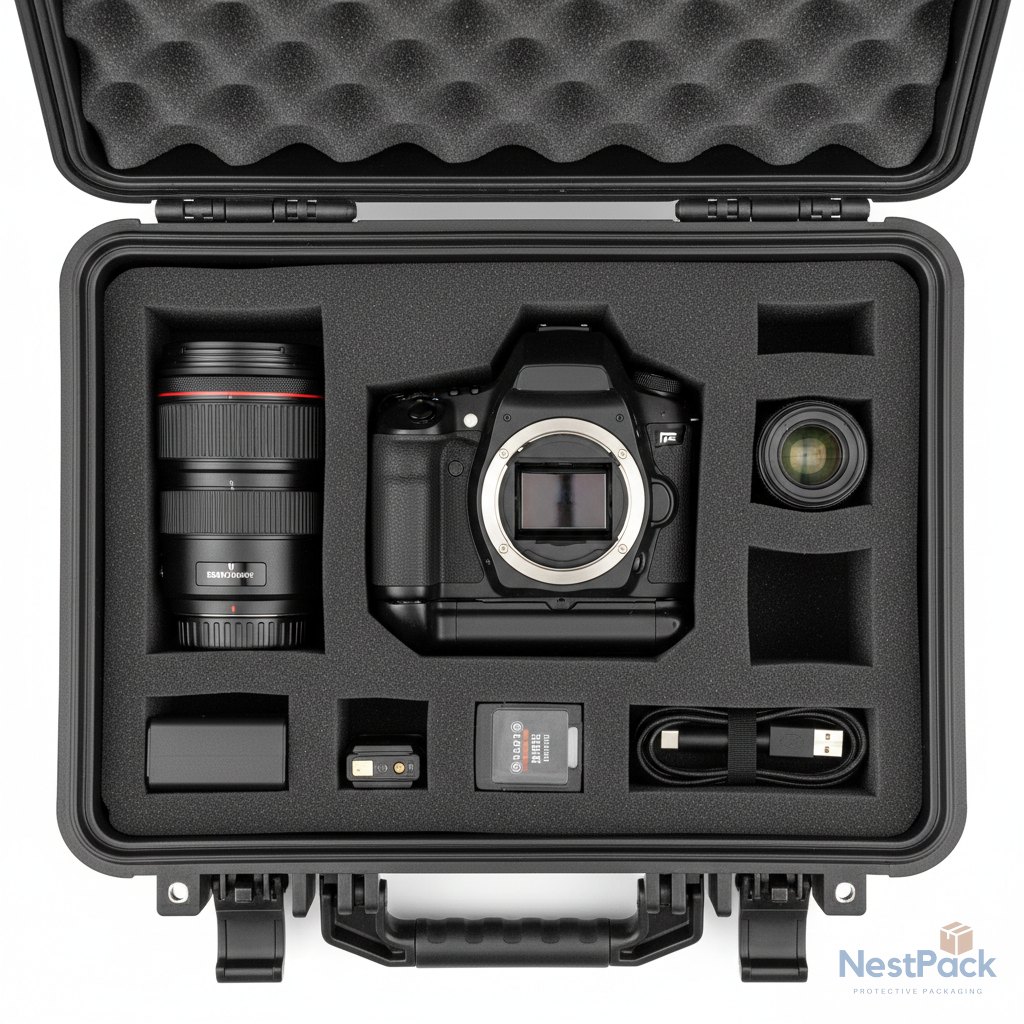
Milling produces geometry that is impossible with a die: blind pockets, multi-depth cavities, cable channels, hinge relief, logos and undercuts. It is the manufacturing method behind every Pelican-style hard case with custom fitted foam.
3-Axis CNC Milling
Precision toolpaths on X, Y and Z axes for compound cavities and pockets.
Pocket Milling
Blind cavities that cradle sensitive components without through-cuts.
Contour & Profile Milling
Sharp outline geometry — logos, cable channels, hinge relief.
Deep Cavity Milling
Cavities up to 100 mm depth in a single set-up for tall equipment.
Tolerance ±0.5 mm
Repeatable machining accuracy for pluck-foam and instrument fits.
Superior Surface Finish
Fine razor edges — the industry standard for premium hard cases.
What is Die Cut Foam?
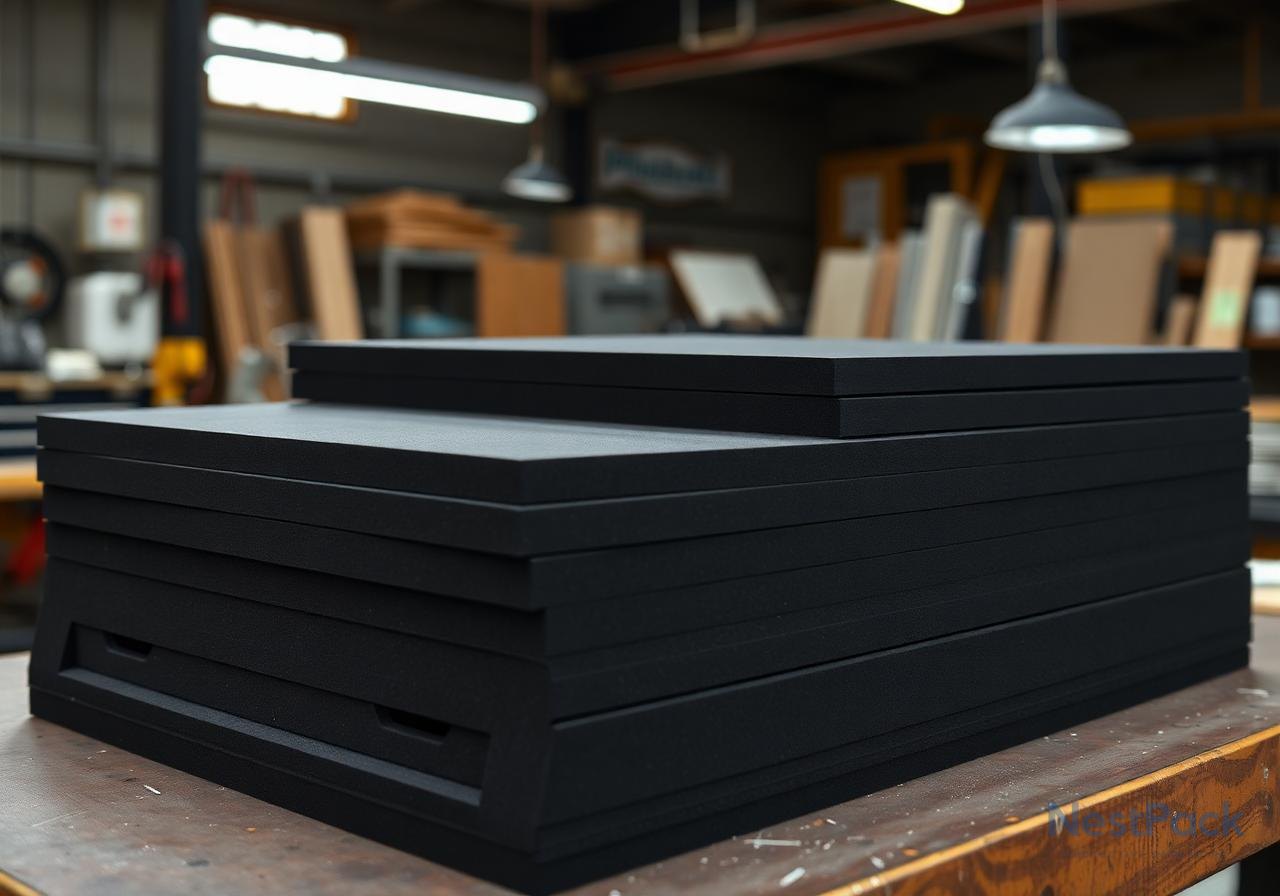
Die cut foam is produced by pressing a steel rule die into a foam sheet under a hydraulic press. The die — a bent steel strip formed to your outline — stamps out identical parts on every stroke, in seconds.
Die cutting is the fastest and most cost-effective way to produce high volumes of flat foam parts: corner blocks, gaskets, layered pluck-foam sheets and OEM assembly consumables. Unit cost drops sharply above the MOQ because tooling amortises across the run.
Steel Rule Dies
Custom-formed rule steel bent to your outline geometry for clean cuts.
Hydraulic Press
High tonnage press strokes cut layered foam in seconds — every stroke identical.
Mass Production
Ideal above 500 sets — die-cut cost drops sharply with volume.
Repeat Accuracy
±0.5 mm repeatability across tens of thousands of parts.
Fast Cycle Time
Seconds per set — perfect for OEM assembly-line packaging.
Low Unit Cost
Best rupee-per-piece rate above MOQ — after one-time tooling investment.
Milling vs Die Cutting
A side-by-side engineering comparison of the two most common XLPE foam manufacturing methods. Use this matrix to shortlist the right process for your part — or contact us and we will spec the hybrid combination.
| Criterion | CNC Milling | Die Cutting | Best For |
|---|---|---|---|
| Accuracy | ±0.5 mm on all axes, 3D contours | ±0.5 mm on flat cuts only | Milling |
| Tooling Cost | None — CAD to cut | One-time die tooling investment | Milling |
| Prototype | Same-day from drawing | 3–7 days for die tooling | Milling |
| Production Quantity | 1 to 500 sets | 500 to 100,000+ sets | Die |
| Complex 3D Geometry | Deep pockets, contours, undercuts | Through-cut outlines only | Milling |
| Lead Time | 1–5 days | 5–10 days (incl. tooling) | Milling |
| Repeatability | CAD-driven, identical | Stroke-driven, identical | Both |
| Surface Finish | Razor-sharp CNC edges | Clean stamped edges | Milling |
| Investment | Zero setup for you | Amortised over volume | Milling |
| Customisation | Design change in minutes | New die required | Milling |
| Best Application | Custom inserts, hard cases, prototypes | Corner blocks, gaskets, high-volume flats | Both |
Manufacturing Process
From your first drawing to dispatched parts — an 11-step workflow executed entirely in-house at our Bengaluru facility.
- 01
Customer Drawing
You share a PDF, DWG, STEP or product photo.
- 02
CAD Design
Our engineers model the cavity layout and layer plan.
- 03
Material Selection
XLPE density, thickness and colour matched to load and finish.
- 04
Prototype
Same-day CNC prototype for form-fit-function validation.
- 05
Approval
You sign off drawing revision A before we scale.
- 06
CNC Milling
3-axis routers cut precise pockets, contours and cavities.
- 07
Die Cutting
For high volume: steel rule dies stamp production sets.
- 08
Assembly
Layered foam bonded, labelled and dressed to the case.
- 09
Inspection
Dimensional, appearance and fit checks per QA plan.
- 10
Packing
Bulk or kitted per your line — barcoded when required.
- 11
Dispatch
Pan-India logistics with next-day metro delivery.
Advantages of XLPE Foam
Cross-Linked Cell Structure
Chemically bonded polyethylene chains form a fine, uniform closed-cell matrix.
Smooth Premium Surface
Fine skin with razor-sharp CNC edges — ideal for high-value equipment cases.
Excellent Recovery
Retains geometry after thousands of compression cycles inside reusable cases.
Chemical Resistance
Withstands oils, fuels, solvents and cleaning agents without degradation.
Water Resistance
< 1% water absorption — safe for marine, defence and outdoor kits.
High Durability
50+ reuse cycles as a hard-case liner in field-deployed equipment.
Reusable & Long Life
Service life measured in years, not months — a lower total cost of packaging.
−60 °C to +90 °C
Thermally stable for aerospace, defence and cold-chain deployment.
Industries We Serve
Real-World Applications
Medical Equipment Cases
Diagnostic and surgical instruments in sterilisation-compatible XLPE foam.
Military Equipment
Weapon accessories, night-vision optics and communication gear.
Electronics Packaging
PCBs, servers and modules in dissipative XLPE cavities.
Drone Cases
Fitted foam for DJI, Autel and industrial UAVs — arms, batteries and controllers.
Testing Equipment
Signal analysers, oscilloscopes and calibration standards.
Power Tool Cases
Machined pockets for drills, drivers and accessory kits.
Camera Equipment
Cinema-grade cameras, lenses, gimbals and audio kit.
Industrial Instruments
Metrology, inspection and lab-grade instruments.
PCB Packaging
ESD-safe XLPE trays for board handling and transit.
Automation Components
Sensors, actuators, controllers and end-effectors.
Semiconductor Packaging
Wafer carriers, reticle boxes and process modules.
Battery Packaging
Li-ion cell trays and pack transport with thermal spacing.
Sensitive Equipment
Any high-value asset that must survive years of field reuse.
Why Choose NestPack
Cities & Industries Served in India
From our Whitefield Bengaluru manufacturing facility we deliver CNC-milled and die-cut XLPE foam fitments pan-India — electronics clusters in Chennai, Hyderabad and Coimbatore; automotive belts in Pune, Ahmedabad, Vadodara, Surat, Rajkot and Nagpur; aerospace and defence programmes in Bengaluru, Mumbai, Hosur, and Visakhapatnam; NCR OEMs in Delhi, Noida, Gurugram and Faridabad; northern industrial hubs in Chandigarh, Mohali, Ludhiana, Kanpur and Lucknow; medical device manufacturers in Kochi and Trivandrum; and industrial exporters in Kolkata, Bhubaneswar, Ranchi, Jamshedpur, Jaipur, Indore, Mysuru, Hubballi, Belagavi, Vijayawada and every major SEZ, EOU and industrial estate.
Frequently Asked Questions
Related Guides
EPE Foam vs XLPE Foam
Density, cost, shock absorption and export packaging — the definitive material comparison.
ReadAnti-Static EPE Foam Guide
When to specify pink ESD vs conductive black foam for PCB packaging.
ReadProtective Packaging Guide
Layer strategy, tolerance and material choice for custom foam inserts.
ReadFoam Insert Design Guide
Interactive tool to match a hard case + custom foam to any component.
ReadIndustrial Packaging Solutions
Full catalogue of foams, hard cases, corrugated and plywood boxes.
ReadRelated Products
XLPE Foam
Cross-linked PE foam with premium surface for hard cases.
EPE Foam
Lightweight closed-cell PE foam for protective packaging.
EVA Foam
Ethylene-vinyl acetate foam for cushioning and inserts.
PU Foam
Open-cell polyurethane foam for lightweight cushioning.
Anti-Static Foam
ESD-safe pink/black foam for electronics and semiconductors.
Custom Foam Inserts
CNC and die-cut foam fitments — designed to your equipment.
Hard Carry Cases
Waterproof polymer cases with custom pluck & CNC foam.
Corrugated Boxes
Multi-wall corrugated boxes with foam inserts.
Get a Custom Foam Fitment Quote
Send us your product drawing, CAD file or a photo — you will receive a technical response with material recommendation, tolerances and pricing within 24 hours.
- Email: sales@nestpack.in
- Phone: +91 96863 88696
- WhatsApp: Chat now